
The gap that started it
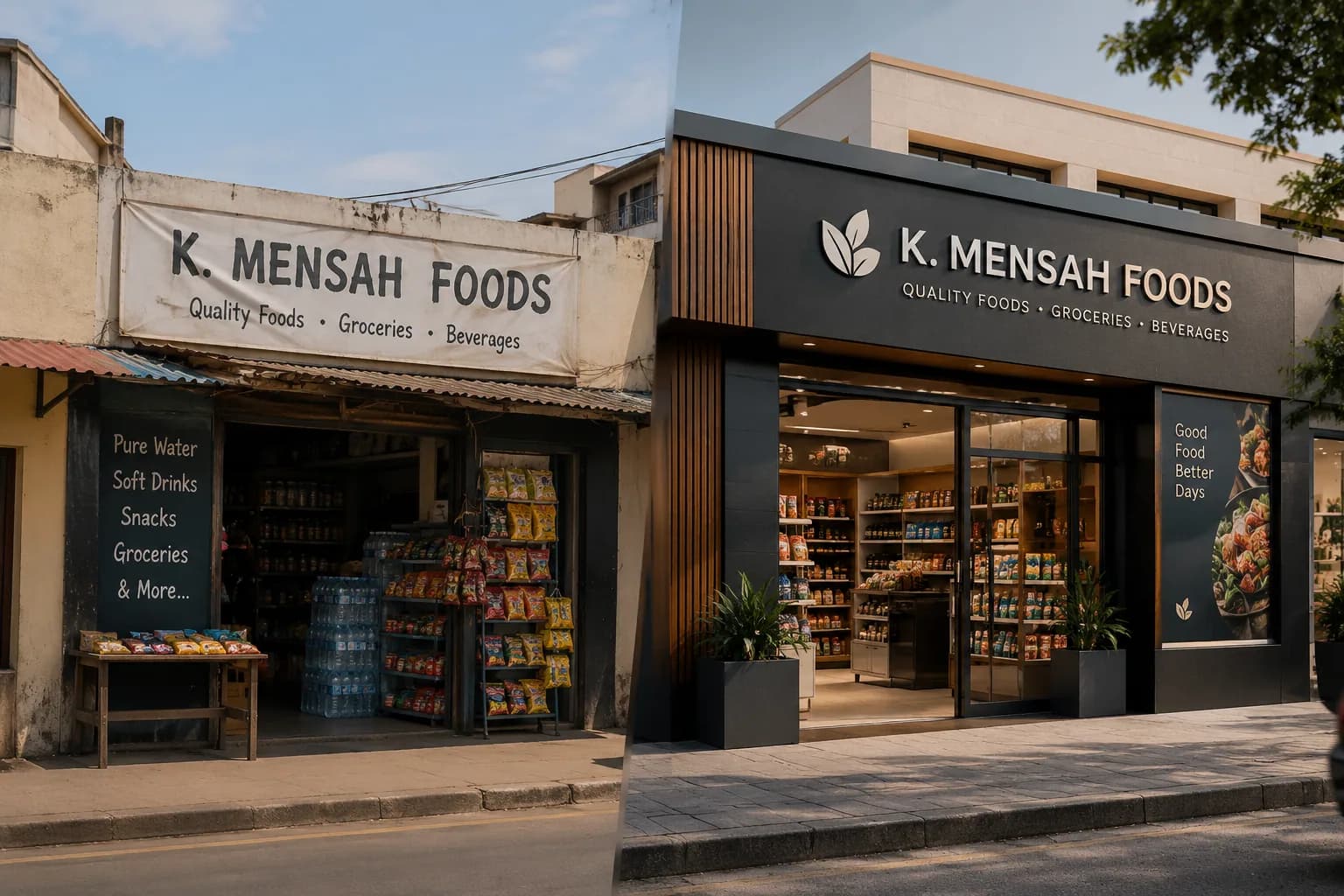
Walk through any commercial district in Accra, or scroll through the online presence of a growing Ghanaian business, and a pattern shows up quickly. The businesses themselves are often genuinely strong. The people running them know their industry, understand their customers, and have built something real. But the way that business presents itself online or on paper rarely matches the seriousness of the work happening behind it.
A logo that looks improvised. A website that exists but doesn't actually convert a visitor into a client. A brand identity that shifts depending on who last touched it. None of these are small problems. They are the difference between a business being taken seriously in the first ten seconds of contact, and being quietly written off before a real conversation even starts.
That gap, between what a business actually is and what its branding tells the world it is, is the reason Articept exists.
Hands-on by principle, not by circumstance
Articept is led directly by Anthony Osei Mensah, and today that means most of the work still moves through his hands personally. But hands-on leadership was never meant to describe a ceiling on how big the studio grows. It describes how it's run.
As Articept brings on more creative talent, the plan has never been to step back into a purely managerial role and watch from a distance. The commitment is to stay genuinely involved across the business, not as an occasional check-in but as someone who still shows up inside the actual work: strategy, design decisions, client relationships, the kind of operational detail most growing studios eventually hand off entirely. That's a deliberate choice about how to lead, not a temporary stage before handing things over.
The reasoning is the same one that shaped the studio from day one. A brief that passes through several layers before reaching the person actually doing the work tends to lose the nuance that made it worth building in the first place. Staying close to the work, whatever the size of the team eventually doing it, is how that nuance survives.
Where the name actually comes from
Articept's own tagline, the path less travelled, is not a marketing flourish added after the fact. It is where the studio's name and identity actually originate.
The founding idea was straightforward: the brands worth building are the ones willing to take the less travelled path, rather than reaching for whatever look is already common in the market. That filter still governs every project taken on today. It means resisting the pull toward the safe, the templated, or the design equivalent of something already seen a hundred times elsewhere. A business that refuses to blend into its market deserves a brand that does the same.
What staying small on purpose actually protects
None of this works without real constraints, and Articept holds to a few on purpose.
The studio works with a limited number of clients at any given time. That is not a capacity problem to eventually solve. It is a deliberate decision, because fewer active projects means every one of them gets genuine focus rather than a slot in a queue competing for attention.
The work itself stays narrow too, by design. Three things: logo design, UI/UX and web development, and brand strategy as a consultative engagement rather than a productized deliverable. That focus exists because trying to be everything to everyone is how studios end up being merely adequate at all of it, instead of genuinely excellent at a few things.
And speed matters, but never at the cost of the work itself. A tight, modern process is what makes fast delivery possible without cutting corners on craft. Most projects still complete within about seven days, the same standard whether the client is the first business Articept ever worked with or the fiftieth.
The principle underneath all of it
Every one of these decisions, the small client list, the narrow focus, the insistence on originality over templates, exists to protect one thing: the quality of what gets put someone's name on. That is the actual filter behind every project Articept takes on, and the one behind every project it turns down.
A business that is serious about its brand deserves a studio that treats that seriousness as the whole point, not an inconvenience to work around.